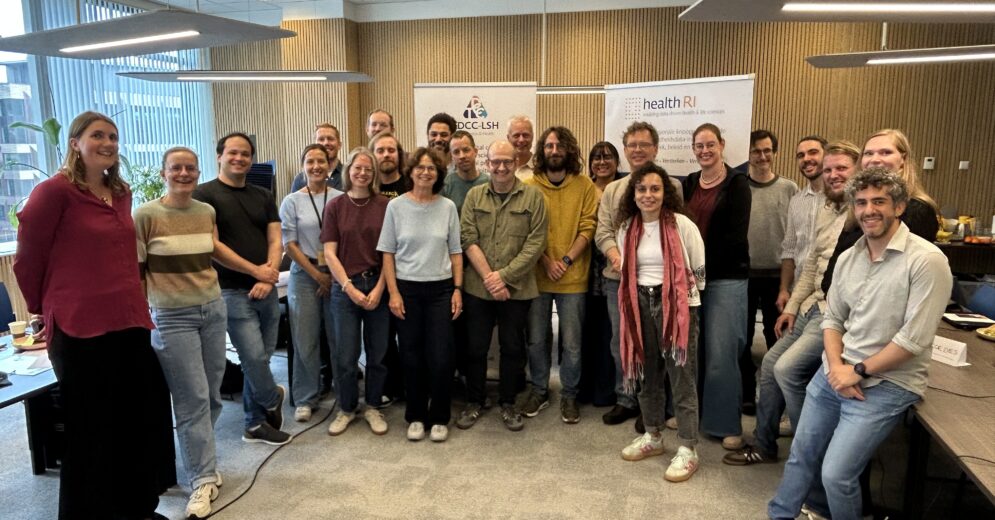
Behind the Health-RI scenes: an interactive training day for TDCC-LSH FAIR fellows
On 14 September, Health-RI colleagues and fellows from the TDCC-LSH FAIR Fellowship training programme came together to explore a shared challenge: how can we make research data easier to find, access and reuse for research? Health-RI shared its work on the National Health Data Catalogue and preparations for the European Health Data Space (EHDS), which will make it easier for researchers to discover and access health data for their research. The fellows brought their hands-on experience from universities and UMC’s, helping researchers make their life sciences and health data Findable, Accessible, Interoperable and Reusable (FAIR. Bringing the two groups together in one room inspired lively discussions, new insights and new opportunities for collaboration.
What will the EHDS mean in practice for researchers and research institutions?
The day started with a refresher and update from Maartje Bal, on the European Health Data Space (EHDS), including how researchers will request a data permit. The conversation quickly moved from regulation to real-life challenges. How do you know whether consent for data reuse was given in the past? How quickly will data holders need to respond to requests? And what does the EHDS mean for existing or already publicly available datasets? One thing became clear: research institutions still have considerable work ahead to prepare for the EHDS. Many practical questions also remain to be worked out. The experiences of the FAIR fellows provide valuable insight into the obstacles institutions may face and help to turn regulation into workable practice ahead of the implementation of the EHDS on 26 March 2029.
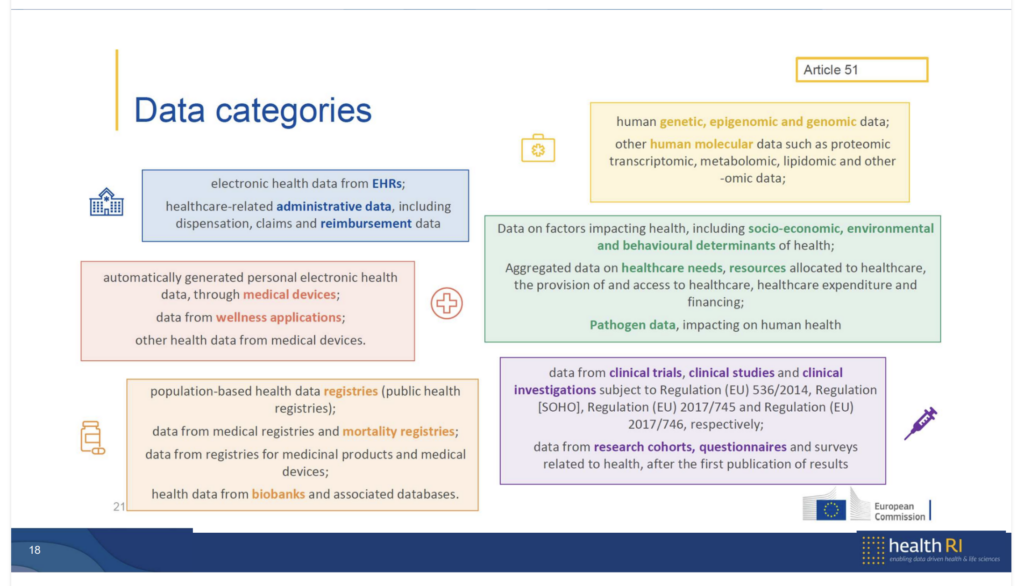
Making data findable in the Health-RI catalogue – HealthDCAT-AP
Next on the agenda was a brief introduction to HealthDCAT-AP and the Health-RI metadata model by Hannah Neikes. The Health-RI metadata model is used to make data sets findable in the National Health Data Catalogue. Metadata provides essential information about a dataset, such as what it covers, which patients or types of data are included, how the data is structured and how it can be accessed. Using a standard such as HealthDCAT-AP ensures that this information is consistent, interoperable (with the EHDS data catalogue) and unambiguous. The discussion raised some practical questions, particularly from participants working with data in public repositories: How should these datasets be described in the catalogue, and how should the catalogue connect to the repositories where the data itself is stored?
Search, request and analyse data securely
Finding the right dataset is only the beginning. What happens when a researcher actually wants to use it? Marianne Knoop-Pathuis Baarda guided the fellows through the process of searching for datasets and requesting access. This included the role of the Health Data Access Body (HDAB) in reviewing requests, as well as the Secure Processing Environment (SPE), where approved datasets can be combined and analysed securely. Connecting these processes to their everyday experience in analysing and curating data, the fellows raised important practical considerations: How long will it take to gain access to data? What limitations might researchers encounter within an SPE? Will specialised analysis tools be available? And how will international researchers be authenticated? These discussions provided valuable insight into what researchers will need to work effectively in practice.
Making data findable in the Health-RI catalogue – Putting the metadata model into practice
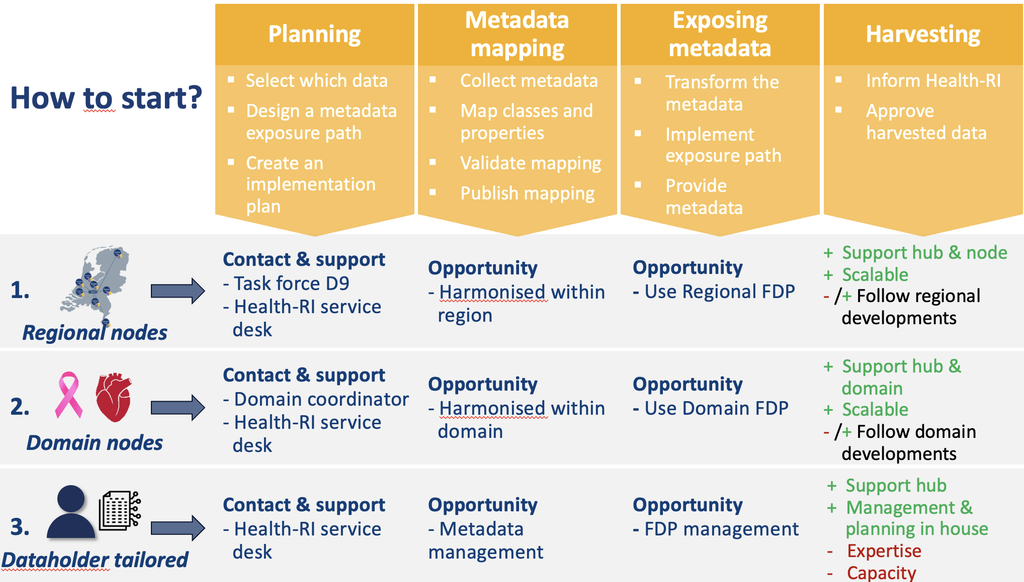
In a hands-on session guided by Robin Verjans and Lucie Kulhankova the fellows then started to prepare several of their own health data sets for publication in a test environment of the catalogue. Five colleagues from the data team assisted the groups in mapping the original metadata to the Health-RI metadata model. Although there was a steep learning curve for some, they eventually concluded that going through the process step-by-step was very helpful. It also revealed some challenges: the model can still leave room for interpretation, and not all the required information, such as a central contact point at the data holder’s organisation, is readily available. Health-RI offers tailor-made support for data providers who want to make their data findable through the catalogue.
Step-by-step through the FAIR metroline
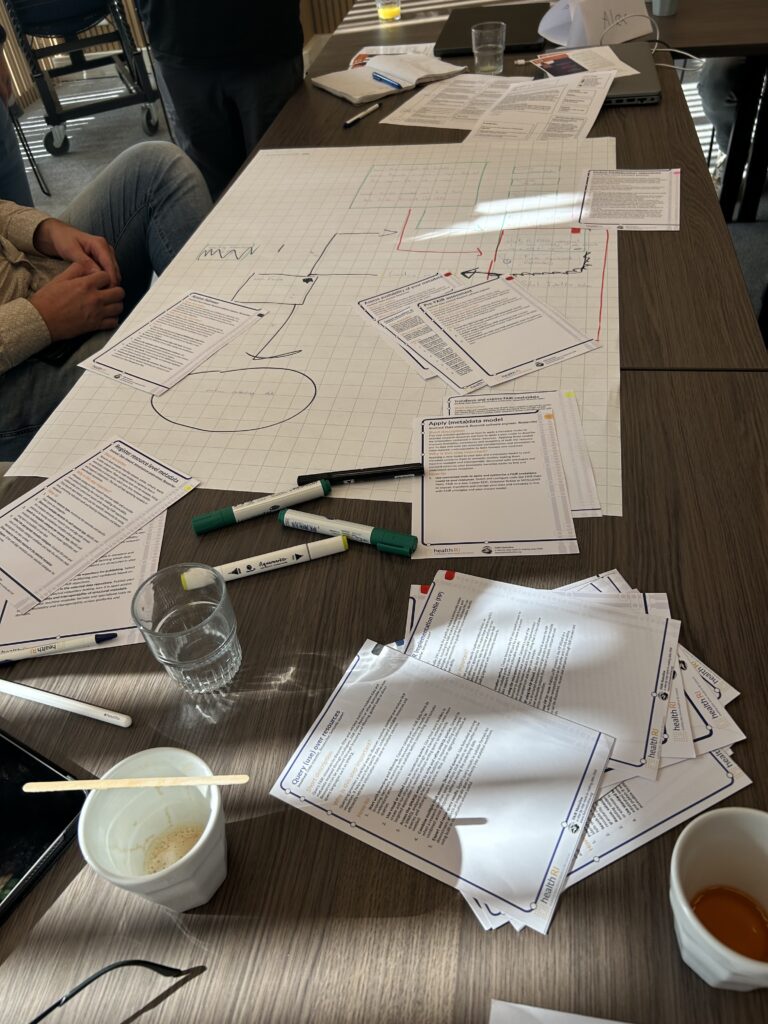
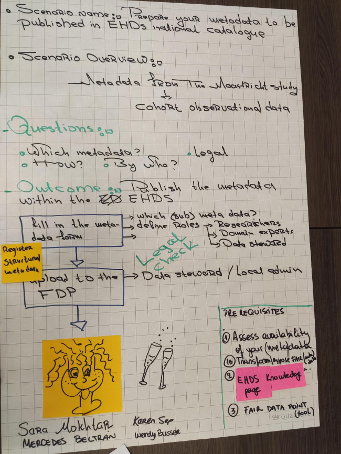
In the final session of the day, Vedran Kasalica, Walter Baccinelli and Sander de Ridder led a hands-on exercise using the FAIR Metroline. The FAIR Metroline is created by a large group of writers as a collection of practical guidance and tools for researchers and data stewards to make data FAIR. Working in groups, the fellows designed new scenarios for real-life examples from their own practice, such as preparing data sets for the catalogue. Although there was some debate at the start on how to accommodate researchers who are new to FAIR, the final conclusion was that tailored scenarios are a valuable way to help researchers find the right steps and tools to make their data FAIR. One of the scenarios elaborated by fellows Sara Moktar, Wendy Busser, Karen Sap and Mercedes Beltrán nicely connects all the topics addressed during the day by sketching the scenario of publishing metadata on observational cohort data of the Maastricht Study under the EHDS.
Key take away of the day
The EHDS is still taking shape, but preparations can start now: making health data FAIR and discoverable in the national catalogue requires practical guidance, technical support, and collaboration between researchers, data stewards, data holders and Health-RI. The day provided insight in what is already being done and, more importantly, what we can learn from each other as we map out the practical steps towards responsible reuse of health and life sciences data.
Curious to learn more?
All materials presented are available in Zenodo: Bal, M., Neikes, H. K., Knoop-Pathuis Baarda, M., Verjans, R., Kulhankova, L., Baccinelli, W., Kasalica, V., de Ridder, S., & Schoots, F. (2026, September 18). Behind the Health-RI scenes: interactive training day for TDCC-LSH fellows, 14 September 2026. Zenodo. https://doi.org/10.5281/zenodo.22826568
- More on the TDCC-LSH FAIR fellowship
- More on the European Health Data Space (in Dutch)