What funders want and what data stewards need: Reflections from a ZonMw FAIR workshop
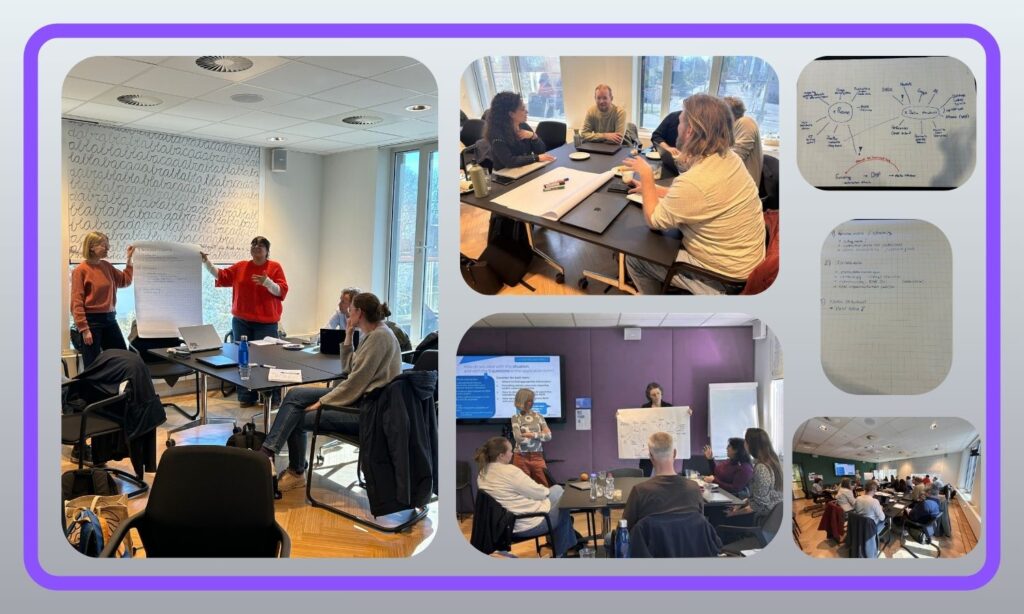
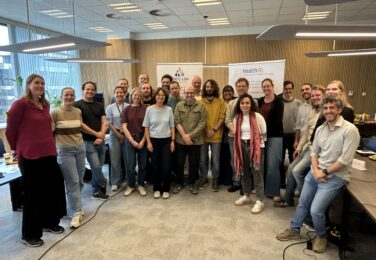
On 7 April, LSH FAIR fellows and ZonMw project leads and advisors for FAIR data and software Ellen Carbo, Margreet Bloemers, and Lieke de Boer, came together for an afternoon workshop as part of the ongoing TDCC-LSH FAIR Fellowship training programme.
The question on the table: how can we jointly advance FAIR data stewardship in the domain of life sciences and health?
FAIR — More than an acronym
After explaining the core activities of ZonMw as a connecting force behind innovation in health, Ellen opened the workshop with a useful reminder that "FAIR" carries more than one meaning. Beyond Findable, Accessible, Interoperable and Reusable, there is also fair as in equitable. As a pointed example: decades of heart disease research focused predominantly on men, leaving women underserved. FAIR data principles, applied well, help address those blind spots.
Also, Ellen reframed a familiar acronym: FAIR as in Fully AI Ready. The argument is practical: if metadata isn't published early and openly, AI systems simply can't find it. Sharing data remains subject to legal and ethical constraints, but metadata should be treated as a priority, not an afterthought.
Key message from ZonMw
Metadata is the most important output for funders. It should be published as soon as possible, because it is what makes research findable by humans and by AI alike. And critically, it is not restricted by privacy or sensitivity rules.
Ellen explains how funders work to make change happen. They seek to increase impact by the two sides of reusable knowledge: existing knowledge is made optimally findable and reusable so that new knowledge can be acquired and in turn made optimally findable and reusable for research and innovation. To fully deploy knowledge developed in research projects, ZonMw is transitioning from Data Management Plans (DMP’s) to machine actionable OMP’s: Output Management Plans. Ellen reminds the fellows that change happens by policy (make it required), incentives (make it rewarding), infrastructure (make it possible) and skills/training (make it easy). And finally, communities to make it normative. Establishing a community of LSH FAIR experts is an important goal of the TDCC-LSH FAIR fellowship programme: to work collaboratively on FAIR solutions and share these within the broader domain.
Data steward: best idea ever!
After Ellen’s introduction, Margreet invites the fellows to discuss in groups how they would advise on the questions that need to be answered for new research proposals. The fellows come up with suggestions for the reuse of existing data, standards, the involvement of a data steward and budget for data stewards’ activities.
One thing comes out very clearly: data stewards have a lot to offer at the proposal stage. Yet, they are often brought in later, typically at the DMP stage, when key decisions about data collection, standards, and infrastructure have already been made. Involving them earlier is a significant opportunity for the researcher, organisation and partners involved for FAIR-by-design research and for the reuse of existing datasets.
Quote from a fellow
"We are involved too late in advising on reusing data and on FAIR by design. Mostly not involved at the proposal stage but only at the DMP stage"
When it comes to standards, the LSH FAIR fellows consistently highlight the importance of community resources for navigating standards: Bioportal, FAIRsharing, the Ontology Lookup Service (OLS), and FAIR Implementation Profiles (via FAIRconnect) were all mentioned. But the most consistent recommendation is simply: talk to people early.
The groups also highlight a structural issue that deserves attention: there is often no budget in grant proposals for RDM, FAIR infrastructure, or the personnel to manage it. Until this changes, data stewardship will continue to be treated as an add-on rather than a core research activity. Whereas, as one group wrote down: involving a data steward is the best idea ever!
In the second part of the workshop, the fellows touch upon data stewards' competences and job profiles. Margreet referred to work being done in the Netherlands to better define this new profession and its different flavours, in the context of the National Programme Open Science and recently by Research Data Netherlands. The groups agreed that changing career pathways and strengthening the role of data stewards requires the full landscape to move, funders, institutions, and professional communities together.
Message from ZonMw
Learning about the position of data stewards helps funders set feasible requirements for RDM and ensure their involvement in funded projects.
The playing field: EHDS, EOSC, and what's coming
The workshop also touches on the broader landscape using a football analogy: initiatives like the European Health Data Space (EHDS), the European Open Science Cloud (EOSC), and Health-RI define the rules and provide the infrastructure. Everyone plays on the same pitch and we need a level playing field. ZonMw is actively involved in aligning policies and training opportunities across European funding organisations.
EHDS is the EU's ambition to make health data accessible across European borders for care, research, and policy in a secure and trustworthy way. EHDS is expected to change how health data is handled, affecting research institutions, software companies that provide healthcare platforms and tools, healthcare providers, patients, and policy makers. Yet another argument for consolidating data stewardship capacity.
Where does metadata go?
The workshop ends with a practical question from the floor: what is the best place to make metadata findable? The answer from ZonMw: the National Health Data Catalogue (which ZonMw intends to encourage projects to use as it matures), combined with domain-specific catalogues. FAIRsharing, Bioportal, and FAIRconnect are the key registries for finding what exists.
The way forward
Moving from FAIR as policy to FAIR as practice is a shared responsibility that requires funders, institutions, researchers and data stewards to work together. When data stewards are involved early, supported, and recognised, progress becomes possible. Workshops like this one are a good place to strengthen that collaboration.